


21 years of excellence
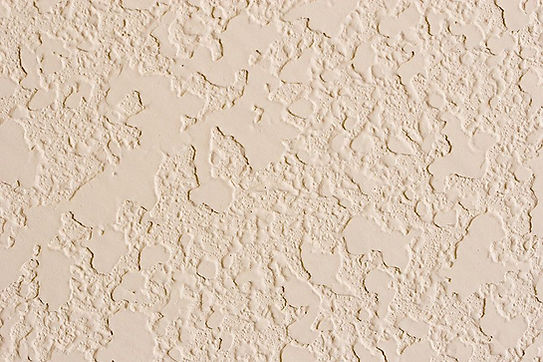
Different textures
Modern trends have tended toward flat, blank walls and a focus on color to bring a room together, but adding a unique wall texture to a room, or even to a single accent wall, can bring a personality to your home that a color choice simply cannot. Texturing can even help hide architectural errors, saving you costly repairs by allowing an uneven wallor ceiling to simply fade into an attractive textured pattern.
Texture options

As its name implies, the orange peel texture is reminiscent of a citrus rind, featuring gentle mounds and dimples. The look is achieved by spraying a combination of drywall mud and water onto the surface, and then going over the mixture with a roller. The orange peel style can be applied to both ceilings and walls to warm up a room.
Before & After

This process is repeated until the entire ceiling is covered in this pattern. Stomp brush patterns can vary widely, depending on the type of brush used and the painter’s technique. Popular variations include the slap brush and crow’s foot textures.
Before & After
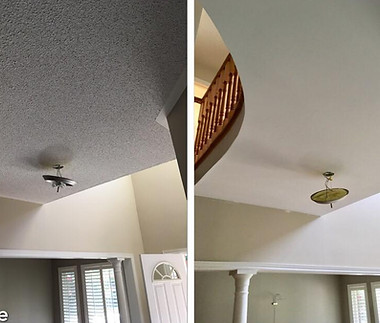
This drywall application is another advanced technique that requires practice (and two people working quickly while the mud is still wet), but the end product can be spectacular.
Before & after

The lace texture is a layered design that resembles old-fashioned Spanish lace. It’s mostly used on exterior stucco walls, but can be used indoors as well to add depth and warmth. To produce this classic look, a mixture of drywall mud and water is first sprayed onto the surface; then, a finishing knife is used to carefully flatten the peaks into a smooth, delicate pattern